
If your Amazon cart has been looking a little more expensive lately, you are not imagining things. In January 2026, Amazon CEO Andy Jassy confirmed what many of us moms already suspected — tariffs are now driving up prices across the platform. After Amazon and its sellers burned through the inventory they stockpiled before the tariff rollout, those extra costs are finally hitting our checkout totals.
But here is what I have learned after weeks of adjusting my strategy: you can absolutely still save money on Amazon in 2026. You just need to shop a little smarter. Here are the proven strategies I am using right now to keep my family budget on track despite Amazon tariff price increases in 2026.
Why Amazon Prices Are Rising in 2026
Before we dive into solutions, it helps to understand what is actually happening. According to TechCrunch’s coverage of Jassy’s Davos remarks, the tariffs announced in 2025 initially had limited impact because Amazon and its sellers had purchased massive inventory before the tariffs kicked in. That buffer ran out by fall 2025, and now sellers are making tough decisions — absorb the extra cost or pass it along to shoppers like us.
Many sellers simply cannot absorb a 10 to 25 percent jump in their costs. Some are raising prices, some are holding steady to capture market share, and some are splitting the difference. For busy moms, this means the days of mindlessly clicking “Buy Now” are over. But the savings are not gone — they just take a bit more intention to find.
Track Prices Before You Buy Anything
This is the single most important habit I have adopted since tariff increases started. Amazon prices fluctuate constantly, and what looks like a fair price today might be inflated compared to two months ago.
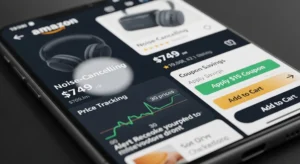
Use CamelCamelCamel. This free tool tracks the price history of every product on Amazon. Paste in any Amazon product link and you can instantly see whether the current price is near its all-time low, at its average, or suspiciously high. You can also set price alerts so the tool emails you when an item drops below your target price.
Watch for the “lowest price in 30 days” tag. Amazon now labels deals that are genuinely at their lowest recent price. If you do not see that tag, consider waiting. This small step has saved me from impulse purchases on items that were actually priced higher than usual despite looking like a deal.
If you are already using strategies to save hundreds on Amazon without sacrificing quality, adding price tracking to your routine is the natural next step in a year when prices are shifting more than usual.
Switch to Amazon Store Brands Where It Counts
One of the biggest advantages Amazon has in a tariff environment is its own portfolio of store brands. Names like Amazon Basics, Solimo, Mama Bear, Happy Belly, and Presto are all priced significantly lower than name-brand equivalents — sometimes 20 to 40 percent cheaper.
Here is why this matters right now: Amazon has more control over the pricing of its own brands than over third-party products. While a seller importing from China might raise prices by 15 percent, Amazon’s store brands can hold steadier because of the company’s scale.
I have switched to Amazon store brands for batteries, trash bags, cleaning supplies, diapers, and pantry staples. The quality is solid, and the savings add up to thirty to fifty dollars per month just from switching products where brand loyalty does not matter.
Lean Into Subscribe and Save Harder Than Ever
If you are not using Amazon’s Subscribe and Save program in 2026, you are leaving real money on the table. The program gives you a base discount of 5 percent on recurring deliveries, and that bumps up to 15 percent off when you have five or more subscriptions arriving in the same month.
Build your list around household essentials you buy every month — toilet paper, dish soap, laundry detergent, snacks, diapers, and vitamins. Once you hit the five-item threshold, every item in that delivery gets the 15 percent discount automatically.
What makes this especially valuable during a tariff year is price predictability. You get notified before each delivery and can skip or cancel any item if the price jumps. For families exploring other ways to stretch their budget, pairing Subscribe and Save with sustainable shopping and resale strategies on Amazon compounds your savings even further.
Use the Amazon Coupon Page and Warehouse Deals
Two of the most underused sections on all of Amazon are the Coupon Page and Amazon Warehouse. Both become even more valuable when prices are trending upward.
The Amazon Coupon Page
Amazon has a dedicated coupon page where you can clip digital coupons on thousands of products — groceries, baby, beauty, household, and health. Discounts range from 5 percent to 40 percent off, and they stack on top of existing sale prices and Subscribe and Save discounts. I check this page every Sunday before finalizing my weekly list, and it regularly saves me ten to twenty dollars per order.
Amazon Warehouse Deals
Amazon Warehouse sells open-box and gently used products at steep discounts — typically 20 to 50 percent off. Items are inspected and graded by Amazon, so you know exactly what condition you are getting. For kitchen appliances, storage containers, electronics, and toys, Warehouse deals are a goldmine.
Compare Third-Party Sellers on Every Product Page

Here is a trick most Amazon shoppers overlook. On nearly every product page, there is a link that says “Other sellers on Amazon.” Tapping it shows every seller offering that product at different prices.
During a tariff year, different sellers absorb costs differently. The main listing might be ten percent higher, but a third-party seller with great reviews could still offer a lower price. It takes ten seconds to check and regularly saves me two to fifteen dollars per item. If you have tried Amazon Haul for budget shopping, comparing sellers on the main marketplace is the next-level version of that bargain-hunting instinct.
Time Your Big Purchases Around Amazon Sales Events
In a tariff year, timing matters more than ever. Amazon runs multiple major sales events throughout 2026, and the discounts during these windows often erase the tariff markup.
Key dates include the Amazon Spring Sale in late March, Mother’s Day Sale in early May, Prime Day in mid-July, Prime Big Deal Days in October, and Black Friday in late November. According to Fortune’s reporting on the tariff impact, shoppers are already adjusting by trading down and bargain hunting during sale events.
My approach: I keep a running wishlist of bigger purchases — kids’ tablets, kitchen appliances, seasonal clothing — and wait for the next sale event. Last Prime Day, I saved over $200 on items I would have bought at full price.
Your Family Budget Can Still Win in 2026
Tariff-driven price increases are real and not going away soon. But moms who thrive on Amazon in 2026 will be the ones who adapt rather than accept higher totals. Track prices, lean into Subscribe and Save, switch to store brands, clip coupons, compare sellers, and time your big purchases around sales events.
None of these strategies requires spending more time — they just require spending it a little differently. Pair these tariff-beating strategies with tools like Alexa+ for managing your shopping lists and reorders, and you will be well ahead of most families navigating this new pricing reality.